Vibration Testing
Evaluate components under random, sine, and sine-on-random vibration inputs to reproduce dynamic conditions that may trigger buzz, squeak, rattle, resonance, or interface movement.
Pinpoint noise issues before they reach customers with Buzz, Squeak and Rattle (BSR) Testing from B83 Testing & Engineering. Our engineer-owned, ISO/IEC 17025:2017 accredited laboratory helps teams evaluate components, assemblies, and products under vibration, environmental, and real-world operating conditions so designs can be refined with confidence.
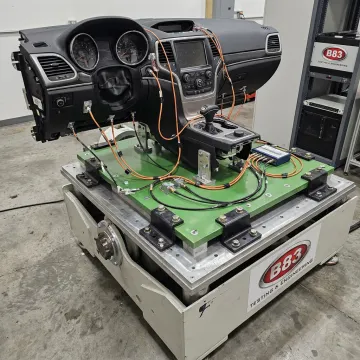
Targeted BSR testing services supported by vibration, environmental, field simulation, and quality assurance capabilities.
Evaluate components under random, sine, and sine-on-random vibration inputs to reproduce dynamic conditions that may trigger buzz, squeak, rattle, resonance, or interface movement.
Capture and recreate real-world operating conditions in the lab to better understand when unwanted noises occur during actual product use or field exposure.
Use RPC® field data replication to reproduce measured service loads and validate durability, performance, and noise behavior under representative operating inputs.
Assess how temperature, humidity, and altitude conditions affect materials, joints, panels, fasteners, and assemblies that may contribute to BSR issues.
Evaluate how sudden impacts, drops, and high-force events influence component movement, looseness, and contact noise during handling, transport, or operation.
Validate product quality, durability, safety, and compliance before release by confirming components meet performance expectations and customer requirements.
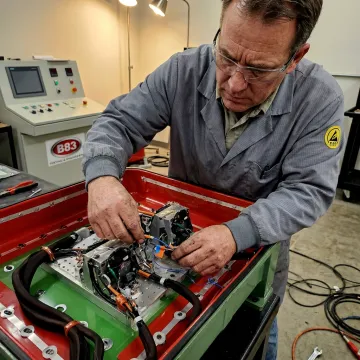
We review your product, known noise concerns, mounting requirements, operating environment, and relevant validation goals. This helps define whether vibration, environmental exposure, field data replication, or a custom combined approach is best suited for the BSR investigation.
B83 Testing & Engineering combines accredited lab quality with engineer-led problem solving.
Engineer-owned and operated, giving clients direct access to practical testing expertise.
ISO/IEC 17025:2017 accreditation supports accurate, traceable, and internationally recognized testing.
Custom fixtures and test development help reproduce real-world product interfaces and conditions.
Flexible scheduling helps accommodate evolving requirements, tight timelines, and complex validation programs.
Engineer-owned testing expertise with hands-on technical support.
Founded in 2002 by engineers, B83 Testing & Engineering is an independent, engineer-owned testing laboratory based in Milwaukee, Wisconsin. The company was built to help manufacturers make informed quality decisions and solve problems tied to product design and manufacturing processes. Over 23 years, B83 has expanded its capabilities across vibration, shock, environmental, fatigue, load/displacement, thermal shock, and field data replication testing. With an experienced eight-person engineering and technician team, advanced chambers, and five electro-dynamic shakers, B83 supports clients across industries worldwide while maintaining the direct technical involvement and flexibility that define its Milwaukee roots.
A BSR test evaluates unwanted buzz, squeak, and rattle noises that occur when a product, component, or assembly is exposed to vibration, motion, temperature changes, or realistic operating inputs. The goal is to detect noise sources early, understand when they occur, and support design changes that improve perceived quality, durability, and customer satisfaction.
Get practical guidance on your BSR testing requirements.

Recognized testing competence and quality systems.
Independent accreditation from a recognized authority.
Engineer-led laboratory focused on accurate results.
Share your BSR testing goals, product details, timelines, and applicable standards. Our team will review your requirements and help define the right test approach.
For immediate assistance, feel free to give us a direct call at (414) 449-9396. You can also send us a quick email at sales@b83test.com.
For immediate assistance, feel free to give us a direct call at (414) 449-9396. You can also send us a quick email at sales@b83test.com.